
 En
En  Fa
Fa 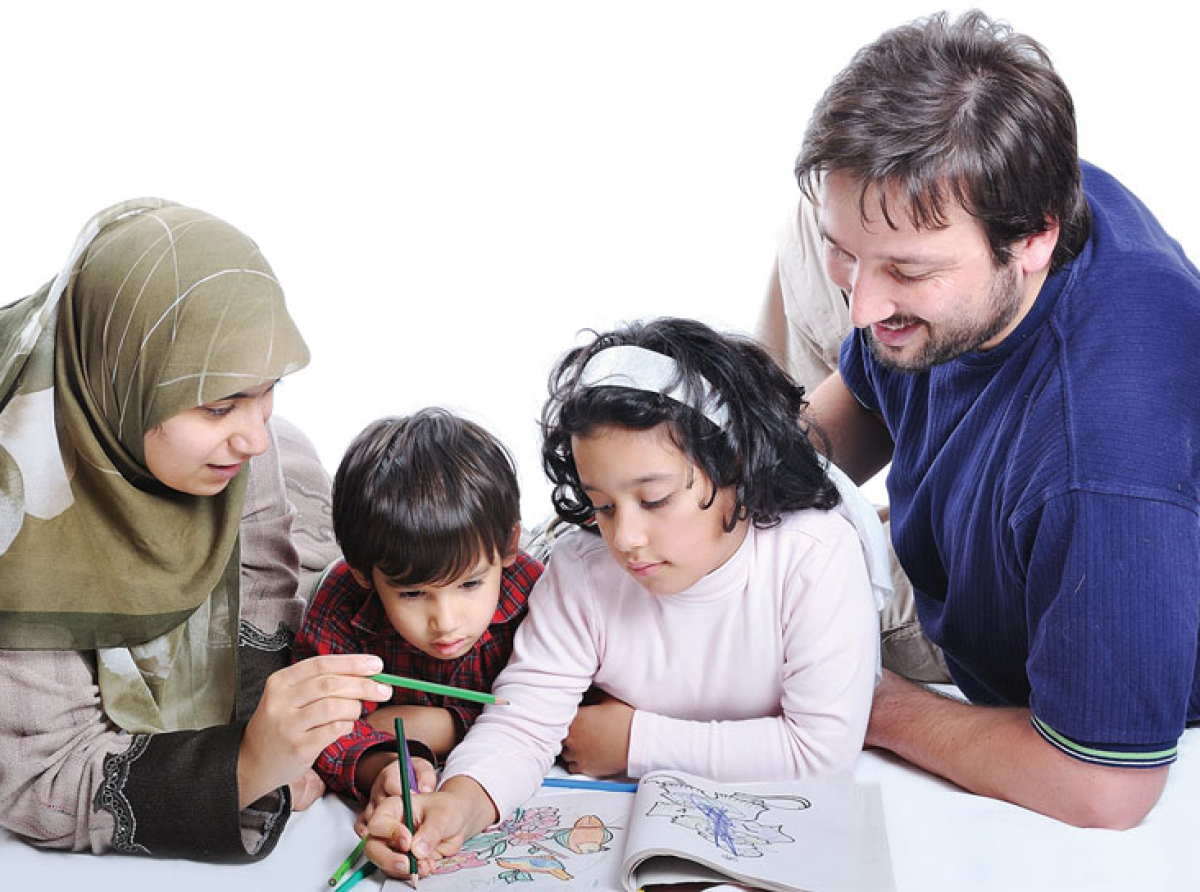
The institution of the family and its functions have long been considered by various religions, schools, and cultures. This influential institution also enjoys a high status in Islam and special attention has been paid to it.
In Islam, the family is one of the fundamental institutions of existence and one of the main structures of Islamic society, which, along with other structures of society, steps forward to realize human goals as the caliph and successor of God.
The institution of the family has taken on various forms over the centuries, and especially in the last few centuries, and has taken on different forms in different cultures. However, the family, in its various forms, has always had many functions.
From the perspective of Islam, humans are needy creatures. Without the help of others, they are unable to fulfill their own needs. Therefore, human beings are created with different talents so that they can fulfill each other's needs. It is clear that this need is not specific to a specific area of human life, but rather occurs in various areas of human life. One of these areas of human need is the need for care and support. The manifestations of this need can be clearly seen at all stages of human life, although this need is more evident during infancy and childhood, as well as old age and senility. The right to protection and care of a child, which is considered one of the rights of the child and in some ways one of the most important rights of the child, is for the protection and security of the child and also for the development of the child. The principle in it is to create conditions and factors that complement the healthy and natural life of the child and prevent the occurrence of many obstacles and accidents. The child needs protection and the purpose of it is the existence of a strong support that helps the child on the path towards growth and perfection. Among the set of human needs, perhaps none are as important and valid as emotional needs and the need for affection and love. It can be boldly claimed that the role of such needs in the continuation of a balanced human life is no less than the role of economic and livelihood needs, so much so that psychologists have listed them among the basic human needs and have considered their deprivation to be the cause of psychological complications and harm and the root of many abnormalities and inconsistencies.
Islam considers mothers to be an important pillar in the upbringing and development of children. Given the importance of a good mother in the development of a child's personality and his or her all-round development, and consequently, the improvement of society, in Islam, young people are advised to be careful in choosing a spouse (meaning the mother of society's future). Islam recommends that in choosing a spouse, characteristics such as chastity, family integrity, piety, and faith in the spouse have an important priority. Even regarding feeding children with breast milk, it has been recommended that, firstly, no milk is as beneficial for a child as breast milk. And not every woman's milk is worthy of eating. The effect of milk in shaping the personality of children has such an effect that sometimes it changes human nature despite the creation of man on divine nature. Another important function of the family institution is affection and companionship. Emotional needs can be considered one of the most essential needs that accompany humans from the beginning of life to the end of their lives. Undoubtedly, no human being can be found who avoids love and considers himself in need of the love and affection of others. The family is an environment in which members satisfy their emotional needs. Although affection and companionship can be felt to a greater or lesser extent in different social environments, the stability, simplicity, and honesty of emotions and feelings are more clearly manifested in the family circle.
Translator:Fatemeh Abbaszadeh
